– personal travel notes

|
| ART AND RELIGION
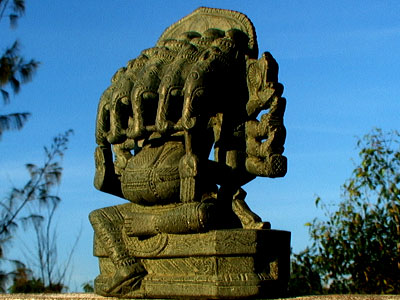
In Denmark and in the West, we have grown up with an image of God which is masculine. In India, there are just as many female gods as there are male. This was something Jens Valmiki explained to me.
The goddesses reign over the darkness, the primeval powers, whereas the male gods reign over the light. Now, one way of looking at that is: Darkness is older than light. Light comes out of darkness. Whereas Christianity has demonizised the dark forces, the female powers, the birth process, and so on, the Hindus appear to find great inspiration there.
Which is reflected in the art of the Hindu temples.
It is in the darkness, the unclear, the chaotic you find “the Mother of Change”.
And when darkness and light meets, this is where the real force is found.
|
| |
| AT WHICH PRICE?
Padma and I have what appears to become an ongoing discussion about how to pay for a piece of art.
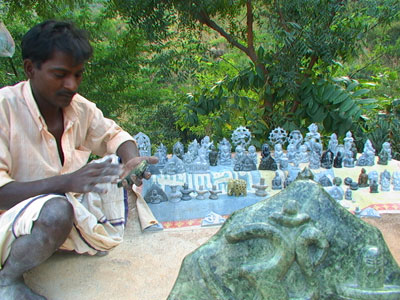
When the guy says the price for his stone elephant statue is 400 rupees, then I'd be offering him 100 whereas Padma insists on paying him the price which he asked for.
“He deserves it,” she states, while I say that this is not the issue – whether he deserves to be paid probably 8-10 times more than what it is worth in an Indian context – and then I begin to ramble about aid destoying local markets, unfair trading and exchange rates, a traveler's plight to respect and observe the nuances and knowing the local culture, plus the fact that she makes it harder for the next Western customer who comes after her.
That doesn’t faze Padma. She still insists: “He deserves it.”
Just like she insists on giving money to every begger who sticks a hand out.
I disagree with aid in those cases where all it does is it makes people passive recipients, waiting for more aid.
I'll keep you posted whether we ever come closer to a common understanding or an agreement on this.
22nd of Dec:
Actually, yes, it seems we are.
|
Art
We meet up with skilled craftsmen and impressing art everywhere we go. A few make it for the tourists, but most of them make it for religious purposes.
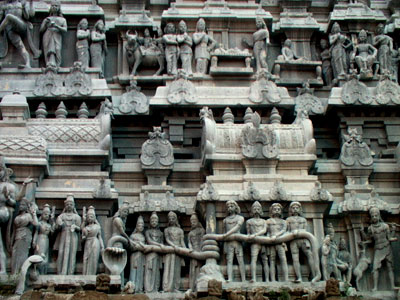
The Arunachala Temple in Tiruvannamalai contains millions carvings and sculptures, according to Politiken’s India-guide. |
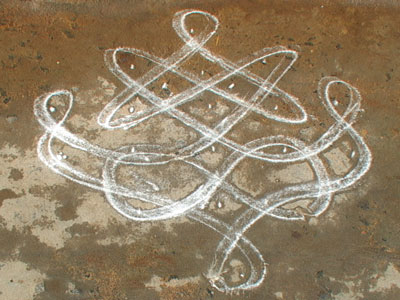
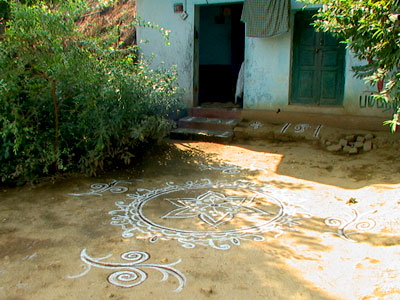
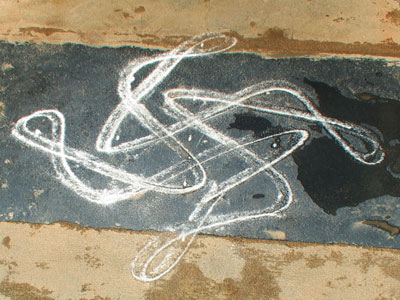
At dawn, the women make these beautiful mandala patterns outside the doors of the houses.
|
posted by Mik Aidt on Dec 18, 2004, at 23:27
|
|